Stuart Stone
My take: You're not liening a trust
You're liening property held by a trust. The name is the property.
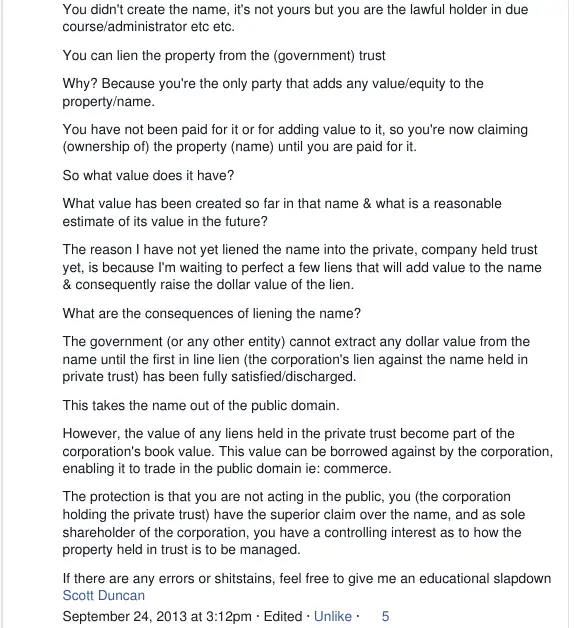
You didn't create the name, it's not yours but you are the lawful holder in due course/administrator etc etc.
You can lien the property from the (government) trust
Why? Because you're the only party that adds any value/equity to the property/name.
You have not been paid for it or for adding value to it, so you're now claiming (ownership of) the property (name) until you are paid for it.
So what value does it have?
What value has been created so far in that name & what is a reasonable estimate of its value in the future?
The reason I have not yet liened the name into the private, company held trust yet, is because I'm waiting to perfect a few liens that will add value to the name & consequently raise the dollar value of the lien.
What are the consequences of liening the name?
The government (or any other entity) cannot extract any dollar value from the name until the first in line lien (the corporation's lien against the name held in private trust) has been fully satisfied/discharged.
This takes the name out of the public domain.
However, the value of any liens held in the private trust become part of the corporation's book value. This value can be borrowed against by the corporation, enabling it to trade in the public domain ie: commerce.
The protection is that you are not acting in the public, you (the corporation holding the private trust) have the superior claim over the name, and as sole shareholder of the corporation, you have a controlling interest as to how the property held in trust is to be managed.
If there are any errors or shitstains, feel free to give me an educational slapdown Scott Duncan :D
Printed copy · Anthology Volume 5, page 990