The Tender For Law

English Only

ENGLISH is the international language of law and commerce. Knowing FRENCH is useful for understanding LEGAL ENGLISH, but FRENCH is not the international language of law and commerce, so we will ignore French speakers who speak to us in the language of a conquered people.

Non.

I understand that you are a proud Québécois, but the people here have nothing but contempt for you because of decades of transfer payments and NONE OF YOU understanding what Quebec sovereignty means. None of you know who Russell Rogers Smith is, and you're too proud and arrogant to teach. Just go away and be Retardier somewhere else.

Volume 3

Sep 23, 2013 11:57 PM

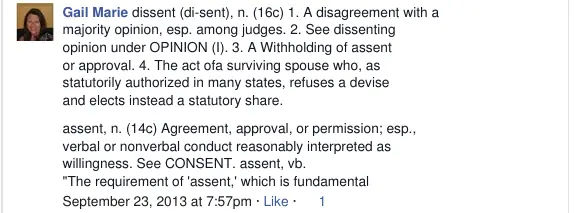
Gail Marie

dissent (di-sent), n. (16c) 1. A disagreement with a majority opinion, esp. among judges. 2. See dissenting opinion under OPINION (I). 3. A Withholding of assent or approval. 4. The act ofa surviving spouse who, as statutorily authorized in many states, refuses a devise and elects instead a statutory share.

assent, n. (14c) Agreement, approval, or permission; esp., verbal or nonverbal conduct reasonably interpreted as willingness. See CONSENT. assent, vb. "The requirement of 'assent,' which is fundamental

Printed copy · Anthology Volume 3, page 914
Printed copy of this comment
Printed copy from The Tender For Law Anthology, Volume 3, page 914 (printed 13 June 2014). Added by this site; not part of the Facebook export.