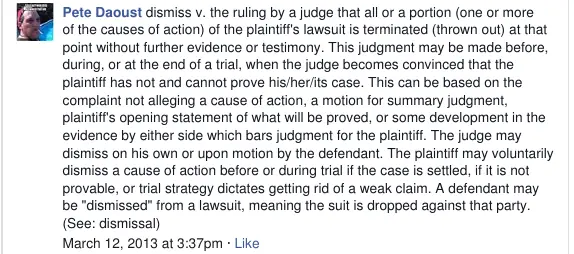
dismiss v. the ruling by a judge that all or a portion (one or more of the causes of action) of the plaintiff's lawsuit is terminated (thrown out) at that point without further evidence or testimony. This judgment may be made before, during, or at the end of a trial, when the judge becomes convinced that the plaintiff has not and cannot prove his/her/its case. This can be based on the complaint not alleging a cause of action, a motion for summary judgment, plaintiff's opening statement of what will be proved, or some development in the evidence by either side which bars judgment for the plaintiff. The judge may dismiss on his own or upon motion by the defendant. The plaintiff may voluntarily dismiss a cause of action before or during trial if the case is settled, if it is not provable, or trial strategy dictates getting rid of a weak claim. A defendant may be "dismissed" from a lawsuit, meaning the suit is dropped against that party. (See: dismissal)
Printed copy · Anthology Volume 5, page 539Printed copy from The Tender For Law Anthology, Volume 5, page 539 (printed 13 June 2014). Added by this site; not part of the Facebook export.